
The Evolution and Impact of Automated Mechanical Equipment explores the transformative progress in automated manufacturing technology, particularly focusing on robot-assisted systems and automation spraying. This field has significantly elevated production efficiency and quality, enabling complex tasks to be executed with greater accuracy and speed. The impact extends across various industries, from automotive to aerospace, where automation is reshaping design, manufacturing, and quality control. As automation continues to evolve, it is expected to further disrupt traditional production models, fostering innovation and efficiency gains across the global manufacturing landscape.
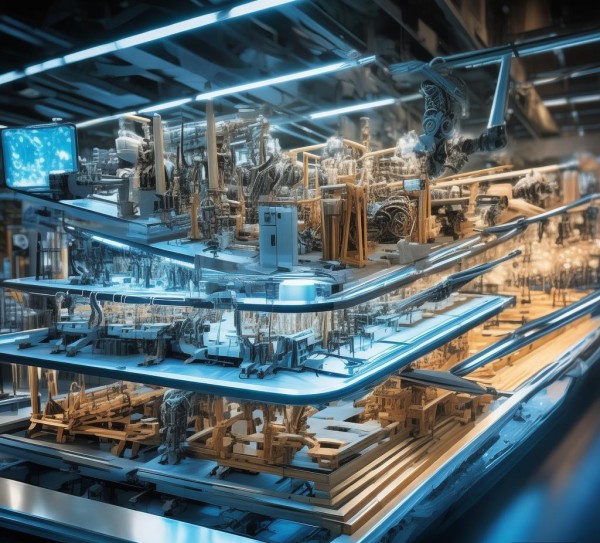
Mechanical equipment, the backbone of our daily operations, plays an indispensable role in shaping the functioning of the world's industries. From the humble tools of a tradean to the cutting-edge machinery of modern factories, mechanical systems have revolutionized the way we work, produce, and interact with the world around us. In this article, we delve into the world of automated mechanical equipment, exploring its evolution, applications, and the profound impact it has had on modern life. Automated mechanical equipment represents a recent technological advancement that has transformed the industry. These devices incorporate cutting-edge technologies such as robotics, artificial intelligence, and the Internet of Things (IoT). Unlike traditional mechanical systems, which demand human intervention, automated equipment operates independently, ensuring precision, efficiency, and reliability. This shift has enabled industries to move beyond their conventional boundaries, achieving unprecedented productivity and cost savings. The applications of automated mechanical equipment are diverse and transformative. In the manufacturing sector, robotic arms are used to assemble, repair, and customize products with unparalleled speed and precision. For instance, robotic arms are employed in the automotive industry to assemble complex machinery, while robotic hands are utilized in the food processing industry to handle delicate components. In the transportation sector, autonomous vehicles and automated infrastructure are revolutionizing the transportation of goods and people, reducing reliance on traditional roads and bridges. In the agricultural sector, automated equipment is being applied to optimize crop yields and enhance resource management. Drones equipped with sensors and cameras are now used to monitor crop health and harvest efficiently. Additionally, automated agricultural systems are enhancing precision farming through drones and ytics to optimize planting and harvesting techniques. The impact of automated mechanical equipment is beyond imagination. It has transformed industries, reducing reliance on manual labor, lowering costs, and increasing productivity. Moreover, it has introduced new challenges, such as ensuring the reliability and safety of automated systems and managing their complexity. Despite these challenges, the future of automation holds immense promise. As technology evolves, we can anticipate further advancements in automated mechanical equipment. These innovations will enable industries to serve the growing demands of a global economy, where efficiency, innovation, and sustainability are at the forefront of business strategies. In conclusion, automated mechanical equipment is a transformative force that is reshaping the world we live in. From the humble tools of a tradean to the sophisticated systems of a modern factory, these devices are reshaping industries and society as we know it. As we look to the future, the potential for automation is vast, and the challenge of ensuring its success will require ingenuity, innovation, and a commitment to excellence.